
Observational Mode
For this project, I chose to create an observational documentary; one that takes a “fly on the wall” approach. My subject was Naomi, an artist and a close friend whose work I deeply respect.
In working with the observational mode, I learned how much can be communicated visually through the camera. But I also came to understand that some things need to be said outright to carry emotional or narrative weight. Naomi is a talented artist, but what makes her work even more powerful is that she lives with a condition that makes it difficult to use her hands. Creating art is physically exhausting for her, and each piece takes extra effort. This fact could’ve been revealed through narration or a title card, but I chose not to explain it directly. Much like in the art world itself, the process is often overlooked in favor of the final product. I wanted to reflect that reality by showing Naomi’s process and the end result, without explicitly revealing the challenges behind it.
I also loved how this project naturally highlighted the way art brings people together. A couple of simple art projects were enough to gather four people in a room, talking and bonding over creativity. That sense of community was something I hadn’t planned for, but it made the piece feel more alive.
Inspired by documentaries like The Secret of Drawing, this project helped me understand the observational mode more deeply. It also revealed how the presence of a camera subtly shapes behavior. Even in a fly-on-the-wall style, people are aware they’re being filmed. Their reactions shift, and sometimes their curiosity about the project becomes part of the footage,especially in the moments I chose to cut.
Ultimately, I hope viewers enjoy this observational piece and the small window it opens into Naomi’s world, her art, and the quiet strength behind it.

Particapatory Mode
This mode of documentary was not only a lot more fun but I thought it was a lot more realistic. When interviewing my friend I found that explaining their experience was much more engaging and interesting to learn about. I even learned things that I had not known before about them. THis also made me realize much more than before the importance of keeping the people you work with information safe. It is so easy for that to be out anywhere in the world if edited poorly or posted on social media. It gave me pause to know that I had to edit as if the film was about me and I was in that chair. What would I like people to see and how would I like to be known by others.
The most difficult part about this project was getting the lighting right. In both the walking scenes and especially the sit down interview (which was at Night) getting everything in place and set up was extremely difficult. Lighting was very hard, with limited lights to use trying to make it look professional in a very unprofessional space was really hard. My only available lights were a ring light, two lamps and the lights in the house. I used the lamps to splash across the background and the ring light as my key light. More than Ever I learned why we have a 3 point lighting setup and the benefit of having two cameras to switch to during an interview.
The other difficult part was timing. When your full time job is not to make a documentary, finding times to overlap with my subject. We both had very different schedules so finding times that overlapped was very difficult.
I did enjoy the process though, I was using this shot for another class project as well and I was extremely disappointed when I finished the sit down interview. Then I looked at some of the other classmates' interviews and was a little happier with what I had produced.
Some things I would have changed are where I did the interview, also how I filmed on campus. I liked the free hand look but it felt a little shaky and off. I think that a daytime sit down interview would have made cutting between day and night smoother transitions while I do think it was visually engaging to have that heavy of contrast.
Overall I hope the audience enjoys this documentary, it is something so simple but I think where you are from is something so important to share. Everyone's individual experience and the beauty that it creates. I liked learning about my subjects, friends, and I enjoyed asking follow up questions when I did not get the answer I wanted. I found it interesting to learn knew things about myself as I asked these questions. What is home for me? How would I answer these questions? And most importantly will the way I contemplated these things be the same way the audience does while watching.
The Final
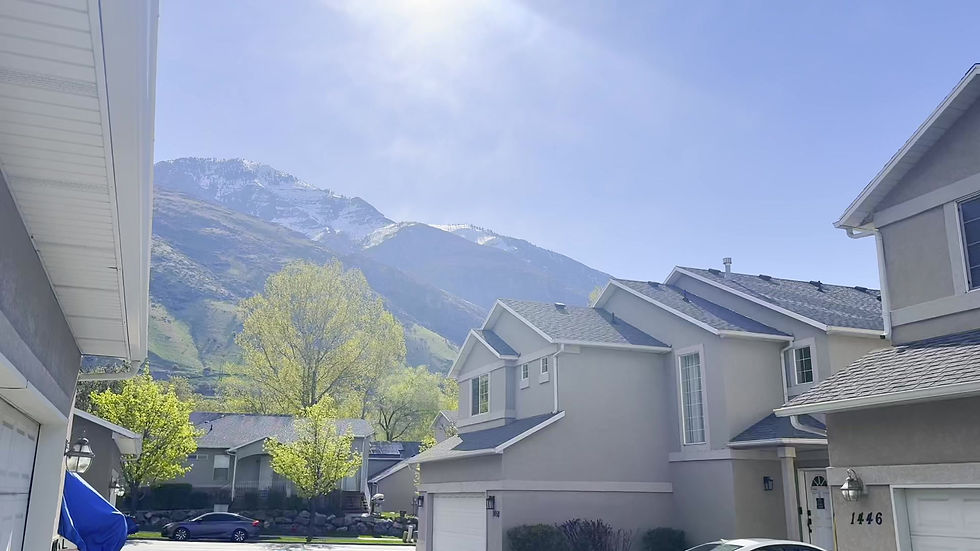
After filming a film and halfway editing it for this final project I realized that it was not going to be good enough for my final project. So I restarted the day before the deadline and created the only thing I could, which was an Easter Sunday documentary. As a devout christian I was intrigued to see if we in our religion celebrated Easter properly. Naturally out of respect excluding the most sacred parts of the day I tried to in 5-7 minutes capture the full 24 hour period of the celebration of the most important day in history. This is what I learned:
First off this film reminds me the most of Grey Gardens. I thought it was a very intimate up close movie of what a family sunday is like. It is something that only an insider would be able to share, and I am an insider. It was funny to see off of my footage what the highlights of the day were, the Lamb Cake being a huge one obviously the food, my dad making fun of my video and my personal favorite, my significant other playing the violin during our Sunday worship. Grey Gardens takes a very similar approach to creating an extremely personal view of what is going on inside the house, the difference is this is a loving family celebrating a holiday and each other.
As I filmed I found it interesting to see what I valued as important throughout the day and what I did not. Having to be an active member in conversation and a good guest I had to specifically pick where to film and when not to. This in turn only tells part of the story. Similar to Sherman’s March where we really did not get the female’s half of the story I felt by missing this footage the audience actually does not see what happened in the day. Specifically during our lunch at my parents house. About 2 hours of good and important conversation is completely left out during this film. We only see part of the story and do not get to fully understand the relationship between my parents and me and totally skip our celebration of easter. This missed information creates the sense in this documentary and many others that we have watched that it was not accurate and that we are not showing the true side of what is happening.
What I also learned while editing this film is the use of J and L cuts and how that can manipulate how the audience feels. Specifically during the violin scene. During the violin scene I used diegetic sound to cut to some trees that were outside just after the performance. It creates a sense of peace and a real easter feel. Then I hard cut to the end of church to jump us back into reality. I felt these cuts were specifically similar to the act of killing. In that movie which is much more dramatic they are constantly using cuts to create a stronger sense of emotion and feel. I hoped to do that in my film with those kinds of cuts as well.
One of my favorite silly moments which I call the leviathan moment was when I dropped my phone. It is the scene where I am getting in the car and my phone drops. Similar to that opening scene in Leviathan you can still tell what is going on but it is extremely disorienting. I love this effect (even though I hated it in leviathan) . It creates a sense of realism, shows the mistake of the filmmaker and grounds it in reality. I hope it is something that others can relate to when watching and feel the struggle of the difficulty of filming.
The time period of this film is one of the things that interests me the most. I think the world is at a very interesting point with religion. Secularism rules alongside capitalism. We see more and more people leave religion for very justifiable reasons but fail to recognize religion's role in the good and the bad in the world. So thinking of this and thinking of what easter stands for I was curious to see what it looks like when two religious families celebrate easter and if we do it properly. I also wanted to make a clear show that religious people in general but those specifically of my faith are at the end of the day normal people. This is a time in history where people do not feel the importance of family or community, people are increasingly lonely and we seem to continuously miss the point of gathering with others. I was hoping to show by this film what fellowship and community look like. That religion is not bad, that it is actually very good and can bring people together.
Now this is not some mormon propaganda rather I hope it to show that people of faith are good people and that it is not something to look down upon or be discriminated against. Rather no matter what the religion we should celebrate each other and enjoy the silly mundane things in life that make life so exciting and wonderful. If it is simply a violin piece, or driving on a beautiful spring day, if it is the flowers blooming or long drives with friends. Maybe it's joking around with family members, playing pickleball or a lamb shaped cake. I hope this documentary shows the beauties of life and how it is supposed to be enjoyed. If it is the day celebrating the resurrection of Christ or any other normal day, go and enjoy it. Happy Easter!

